Uganda
A verdant realm of misty mountains, roaring waterfalls, and the profound gaze of the Mountain Gorilla.
Into the Jungle
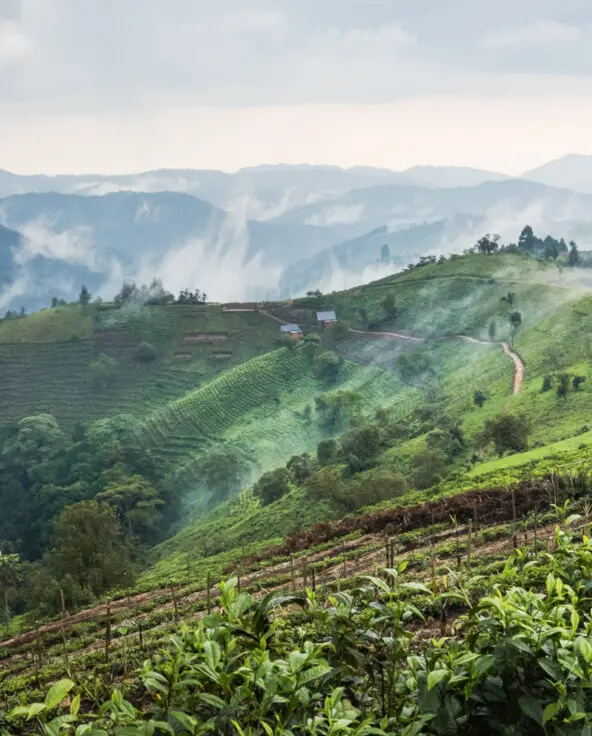
Uganda offers a safari experience unlike any other. It is green, intimate, and deeply wild. From the dense canopy of Bwindi to the savannas of Queen Elizabeth National Park, this is where the Central African jungle meets the East African plains.
Winston Churchill called Uganda the Pearl of Africa, and the phrase has stayed, not because it is poetic, though it is, but because it is accurate in a way that few travel superlatives manage to be. Uganda is a country of startling green, of mist-covered mountains and ancient rainforests, of waterways thick with wildlife. It is geographically improbable: equatorial but cool, flat in the north and then suddenly, dramatically, vertical as you move south and west into the Albertine Rift.
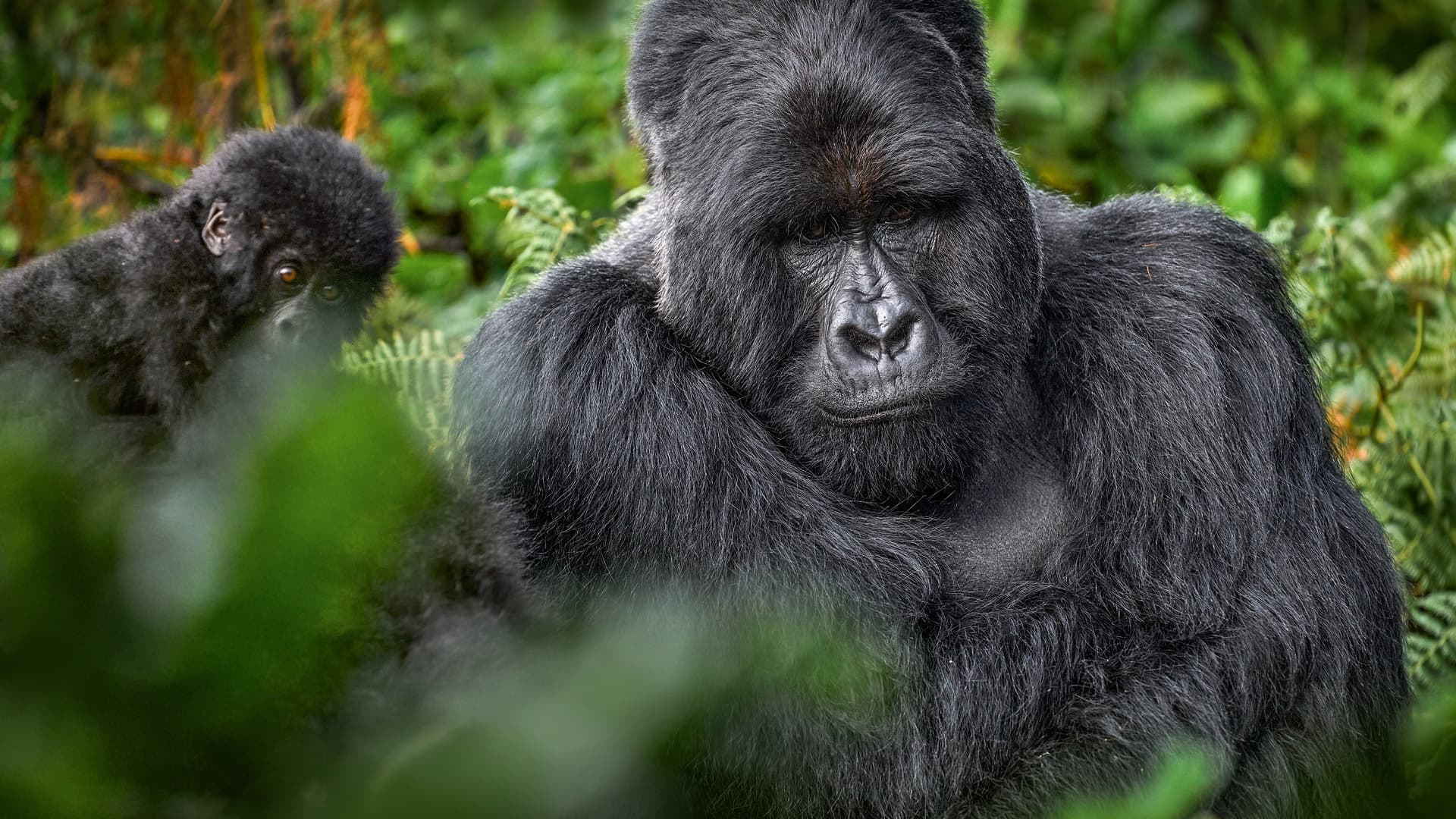
The principal reason most travellers come to Uganda is the mountain gorilla. There are approximately 1,063 mountain gorillas remaining on Earth, a figure that represents a genuine conservation success story over the past three decades, as the population has grown from roughly 620 in 1989. Nearly half of them live in Uganda, distributed between Bwindi Impenetrable Forest and the smaller Mgahinga Gorilla National Park in the south-west. Bwindi, at 331 km², was granted UNESCO World Heritage status in 1994, and it holds between 400 and 500 gorillas across more than a dozen habituated family groups.
A Uganda gorilla trekking permit costs $700 per person, significantly lower than the equivalent $1,500 permit in Rwanda, and includes one hour with a habituated family. The trek itself can range from a one-hour walk to a full day in the forest, depending on where the gorillas have ranged overnight. Most first-time visitors describe the encounter as one of the most affecting experiences of their lives. We would not disagree. What surprises people is the quiet of it, the gorillas are largely indifferent to human presence, which means you sit with them in near-silence, watching them eat and rest and manage the internal politics of family life, and the hour passes in a state that is closer to meditation than wildlife viewing.
Uganda's other great primate experience is chimpanzee tracking in Kibale Forest National Park, which protects the highest density of chimpanzees anywhere in Africa. Kibale is also extraordinary for its other primates, red colobus, L'Hoest's monkey, grey-cheeked mangabey among them, and its birding is exceptional for anyone who cares about forest species.
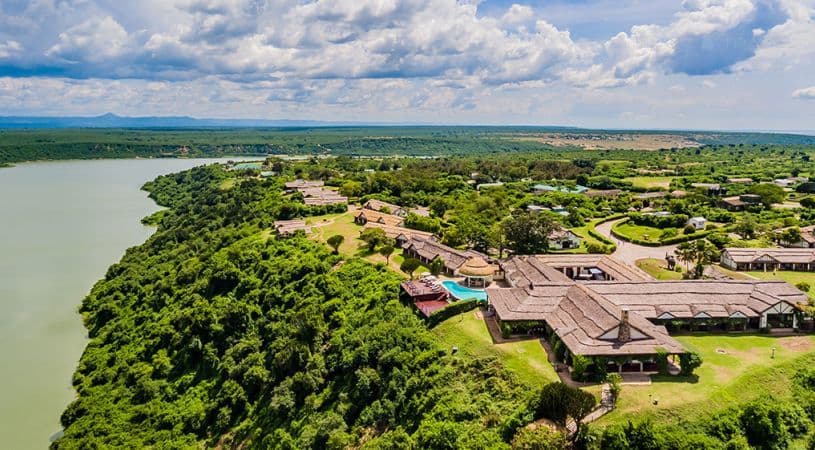
Queen Elizabeth National Park, in the west, offers a completely different register of the Uganda experience. The Ishasha sector in the south of the park is the best place in Africa to see tree-climbing lions, a behaviour that is not well understood but is thought to be learned locally, passed down within specific prides, which makes observing it feel like a privilege rather than a spectacle. The Kazinga Channel, connecting Lake Edward and Lake George, supports what is claimed to be the world's highest concentration of hippos, and the boat cruises along it at dusk, buffalo and elephants at the water's edge, fish eagles overhead, the light going gold then orange, are among the quieter moments of a Uganda journey that stay with you longest.
Uganda is most often combined with Rwanda or Tanzania in a multi-country itinerary. The common pairing is Bwindi with Volcanoes National Park in Rwanda, both gorilla destinations, but with different terrain, different lodge styles, and different qualities of encounter. Those who want to add savannah to their primate experience typically extend into the Serengeti or Masai Mara. We build these circuits regularly, and we find that Uganda consistently surprises people, it is less visited than Kenya or Tanzania, which means more of the quietness that draws people to Africa in the first place.
Gorilla Trekking Seasons
Peak Trekking (June - August)
The driest months offer the best trail conditions and clearer views for photography.
Second Dry Window (Dec - Feb)
Another excellent window for trekking with minimal rainfall and lush scenery.
Gorilla Trekking
A life-changing encounter. Trek through the Bwindi Impenetrable Forest to sit in silence with a family of endangered Mountain Gorillas. It is widely regarded as one of the most profound wildlife experiences on Earth.
- Bwindi Forest
- Once-in-a-lifetime
Queen Elizabeth N.P.
Famous for its tree-climbing lions in the Ishasha sector and boat cruises along the Kazinga Channel, which holds the world's largest concentration of hippos.
- Tree-Climbing Lions
- Kazinga Channel
Signature Uganda Expeditions

Walk with Giants
Secure your gorilla permits early. We handle all logistics for a seamless journey into the wild.
Start the Conversation